Drift Protocol $285M Exploit: Suspected North Korean Operatives
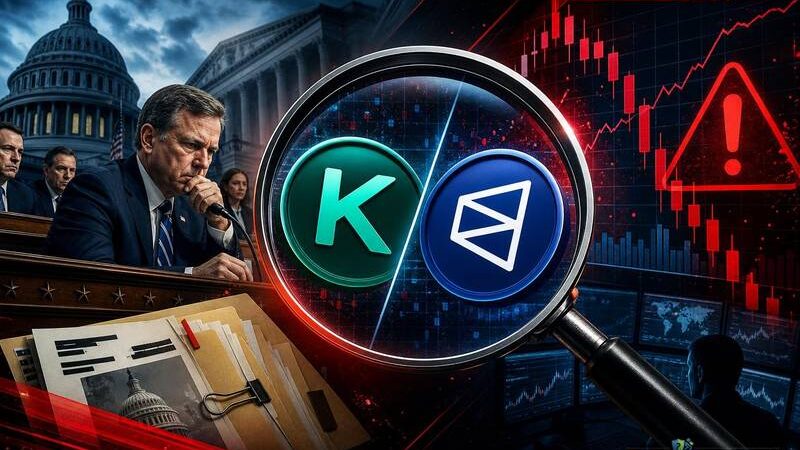
Suspected North Korean operatives have been linked to a reported $285 million Drift Protocol exploit on Solana, after a governance takeover let an attacker seize administrative control of one of the network’s largest perpetual futures venues and drain funds in minutes.
On April 2, 2026, Drift said a malicious actor gained unauthorized access through a durable-nonce attack that rapidly took over Security Council administrative powers. That framing matters because it points to a governance compromise at the protocol level, not a routine phishing incident aimed at retail wallets.
What Happened in the Reported Drift Protocol Exploit
BlockSec calculated the total loss at $285,279,417.69 and said the attacker executed 31 rapid withdrawals over roughly 12 minutes after administrative control changed hands.
According to BlockSec’s reconstruction of the April 1, 2026 attack, the exploit combined multisig approval manipulation with durable nonces after two of five Security Council signers pre-signed malicious governance transactions. That sequence explains why the attacker could move from governance takeover to rapid fund extraction before users had much time to react.
Decrypt reported that the first major transfer was about 41 million JLP worth roughly $155 million to the attacker-linked withdrawal wallet, while the governance takeover transaction on Solscan and the receiving account tied to the withdrawals give readers direct on-chain evidence to inspect.
ON-CHAIN DATA
- Governance takeover tx: 4BKBmAJn…B9RsN1
- Withdrawal wallet: HkGz4K…pZES
- First major outflow: 41 million JLP, about $155 million
- Drain pattern: 31 withdrawals in roughly 12 minutes
Elliptic described Drift as the largest decentralized perpetual futures exchange on Solana and said the laundering behavior and network-level indicators behind the exploit matched patterns seen in prior DPRK-linked operations. That is a more serious allegation than a generic hack report because it raises sanctions and counterparty-risk questions for any venue or service that later handles the stolen assets.
Why the DPRK Link Is Still a Caveated Claim
Elliptic said multiple indicators suggested a DPRK connection, but the brief does not include a public government or law-enforcement attribution naming a specific North Korean unit. Readers should treat the attribution as a well-sourced suspicion rather than a settled conclusion until an official agency or a fuller forensic report confirms it.
ATTRIBUTION STATUS
Elliptic linked the exploit to suspected DPRK actors, but the supplied reporting did not include a public government or law-enforcement attribution naming a specific unit.
If Elliptic’s indicators hold up, the exploit would fit an existing anti-money-laundering and sanctions focus on North Korea-linked crypto theft. That conclusion rests on Elliptic’s reported laundering patterns and network indicators, not on an arrest, indictment, or agency statement published in the materials supplied for this run.
The distinction matters for retail readers because attribution affects recovery expectations and compliance risk. A governance compromise that may involve state-linked laundering patterns is a different problem from an isolated smart contract bug, and the Drift statement, BlockSec reconstruction, and Elliptic tracing analysis all point to administrative control as the critical failure point.
Impact on Drift Users, Solana DeFi, and Market Confidence
For users, the immediate issue was not only lost funds but whether Drift’s compromised Security Council controls could alter the rules that govern withdrawals, risk settings, and emergency actions. That operational uncertainty is why governance incidents often damage trust faster than code bugs that can be narrowly patched.
On April 1, 2026, Phantom added a required warning for users trying to access Drift while its security team investigated reports around the protocol. Wallet-level warnings are one of the clearest signals that ecosystem partners saw elevated risk for ordinary users in real time.
Decrypt reported that DRIFT fell nearly 28% on April 1 as the breach came into view. By $0.0474318 on April 3, 2026, the token was up 6.66% over 24 hours, showing a partial rebound but not a restoration of trust.
The price stabilization also landed in an already defensive market backdrop, which can magnify confidence shocks for smaller DeFi tokens. That wider risk-off tone parallels the caution visible in TrustsCrypto’s coverage of Riot selling 3,778 BTC at $76,626 as miners boosted liquidations, where forced selling rather than organic demand set the pace.
The more useful comparison for readers, though, is internal to Drift itself. TrustsCrypto’s earlier breakdown of the Drift Protocol hack and who lost money is relevant because this incident was defined by a control-layer failure before it became a balance-sheet event.
How Drift and the Industry Are Responding
Drift has issued an initial statement, but the research brief says no full official postmortem was available as of the writing date. That leaves open the key operational questions, including how signer security failed, what governance safeguards will change, and whether any funds can be traced or frozen after the first wave of withdrawals.
BlockSec’s reconstruction and Elliptic’s tracing give the market a starting point for monitoring those next steps because they identify the takeover route and the laundering indicators rather than simply describing a loss. That level of detail is what counterparties, market makers, and users will need before trust can recover in a meaningful way.
Transparent remediation is also becoming part of the broader infrastructure story across crypto. The same investor focus on system integrity appears in TrustsCrypto’s report on Naoris Protocol’s mainnet launch amid Bitcoin Q-Day fears, where security assurances mattered as much as product rollout.
What Users Should Watch Next
The next concrete checkpoint is a full Drift incident report that explains the durable-nonce path, signer exposure, and any governance changes made after the takeover. Without that document, users are left relying on third-party reconstructions and wallet warnings rather than the protocol’s own complete forensic timeline.
Readers should also watch whether the attacker wallet and related addresses continue moving funds through services or chains identified by investigators. If additional tracing ties those flows more firmly to a sanctioned actor, the compliance consequences for downstream venues could become as important as the original loss itself.
FAQ About the Drift Protocol Exploit
What is Drift Protocol? Elliptic described Drift as the largest decentralized perpetual futures exchange on Solana, which is why a governance compromise there carries wider significance for the network’s DeFi market structure.
How much was reportedly stolen or affected? BlockSec put the loss at $285,279,417.69, while Elliptic said the value of the assets stolen was in roughly the same range.
Who is suspected, and what should users watch for next? Elliptic linked the attack to suspected DPRK actors, but the brief does not cite a formal public law-enforcement attribution, so users should watch for a Drift postmortem, further wallet warnings, and new tracing updates tied to the attacker-linked accounts.
Disclaimer: This article is for informational purposes only and is not investment advice.
Disclaimer: This article is for informational purposes only and does not constitute financial or investment advice. Cryptocurrency and digital asset markets carry significant risk. Always do your own research before making any investment decisions.