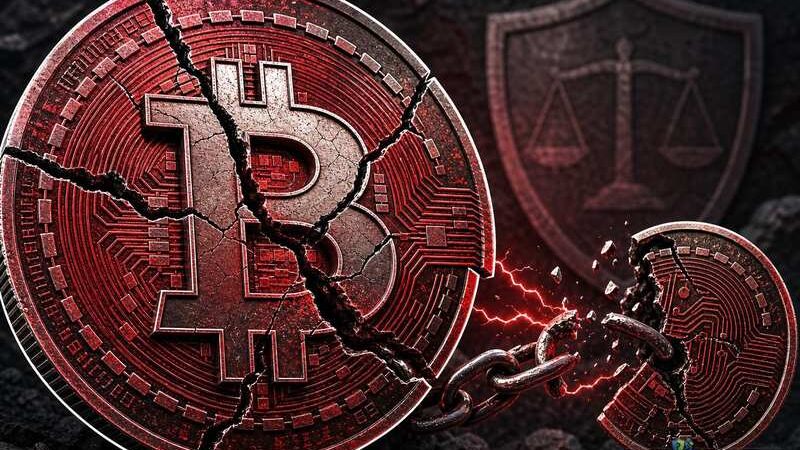
Attorney Seeks to Protect $200B in Bitcoin Tied to Satoshi
In this Satoshi bitcoin lawsuit, an attorney is seeking to protect a Bitcoin cache described in the case as worth roughly $200 billion and allegedly tied to Satoshi Nakamoto. The source pack for this draft, however, only firmly establishes that official New York court links exist for the dispute, while the ownership claim itself remains an allegation.
What the source pack confirms
The clearest evidence in the brief is a New York State Courts Electronic Filing docket page. Its URL identifies New York County Supreme Court and a document list for the matter, which supports the basic framing that this is a court case rather than a social-media rumor.
The same brief also includes one NYSCEF document link and another NYSCEF document link. Those official court URLs indicate that underlying filings are tied to the docket, even though the run did not supply readable excerpts from either filing.
What remains allegation, not proof
That limitation matters. The available material does not extract quoted language from the docket page or from the two linked filings, the first linked filing and the second linked filing, so this draft cannot independently confirm who filed the case, what precise relief is being requested, or how the claimed Satoshi connection is argued.
The safe reading of the NYSCEF docket entry and the two linked court documents, document one and document two, is that a dispute has reached the court record. It is not proof that the Bitcoin belongs to Satoshi or that any court has accepted the underlying ownership theory.
That distinction is the core issue for readers following the Satoshi bitcoin lawsuit. A filing on an official New York court docket gives the claim procedural visibility, but the two cited filings, first document and second document, still need readable review before stronger conclusions can be published.
Why the case still draws attention
The headline claim stands out because it combines a vast Bitcoin valuation with Satoshi’s name, two factors that almost guarantee scrutiny once they appear on an official court filing page. That makes this a different kind of Bitcoin story from corporate accumulation or brokerage expansion into crypto-adjacent trading, because the central question here is ownership, not adoption or market structure.
For now, the only publishable takeaway is narrow. The brief points to an official New York Supreme Court docket listing and two related document pages plus a second document page. Until those filings are extracted and reviewed line by line, the case is notable for existing in the court record, not for conclusively proving any Satoshi-linked ownership claim.
FAQ
Is the Bitcoin confirmed to belong to Satoshi? No. Based on the material supplied for this draft, the only hard evidence is the presence of a court docket page and two linked filings, the first court filing and the second court filing. Those links do not, by themselves, prove ownership.
What is the attorney trying to protect? The headline and outline frame the dispute around Bitcoin allegedly tied to Satoshi, but the supplied evidence for publication is still limited to the NYSCEF case page and its linked filings, the first listed filing and the second listed filing. More specific language about the requested protection would require readable excerpts from those filings.
Why does the claimed value matter? The figure in the headline is what makes the case newsworthy, but the current source pack still points readers back to the official court docket and the two listed filings, first filing and second filing, rather than to a verified valuation record or on-chain proof set.
Disclaimer: This article is for informational purposes only and does not constitute financial or investment advice. Cryptocurrency and digital asset markets carry significant risk. Always do your own research before making any investment decisions.