
Bitcoin’s 4-Year Cycle: Politics, Liquidity, Not Halving
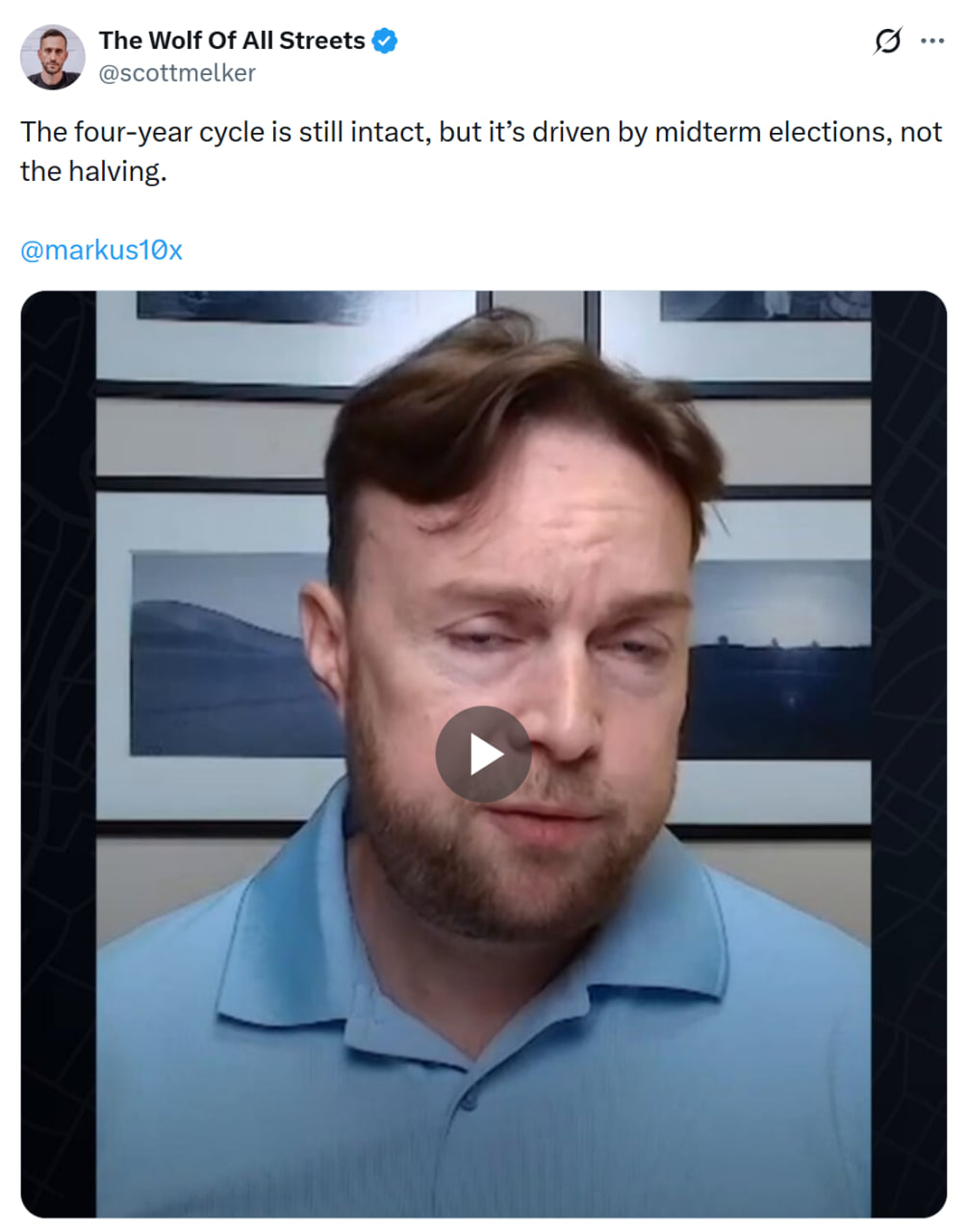
Bitcoin’s commonly referenced four-year cycle remains in effect, but its primary drivers have shifted from the halving schedule to politics and liquidity conditions, according to Markus Thielen, head of research at 10x Research.
Speaking on The Wolf Of All Streets Podcast, Thielen said the view that the four-year cycle is “broken” is misplaced. He argued the pattern persists, but is now influenced more by United States election timelines, central bank policy, and capital flows into risk assets than by Bitcoin (BTC)’s programmed supply reductions.
Thielen highlighted market tops in 2013, 2017 and 2021, each occurring in the fourth quarter. He said those peaks align more closely with presidential election cycles and broader political uncertainty, while the dates of Bitcoin’s halvings have shifted over time and are less directly correlated.
He added that pre-election uncertainty, including the risk that the incumbent party may lose seats in Congress, can weigh on markets and policy expectations. Thielen also suggested that if Republicans were to lose a significant number of House seats, it could limit the administration’s ability to advance its agenda.
Fed rate cut fails to boost Bitcoin
Thielen’s remarks follow Bitcoin’s struggle to build momentum after the Federal Reserve’s latest interest rate cut. Although rate reductions have historically supported risk assets, he noted the current backdrop is different as institutional investors now play a larger role in crypto markets and remain cautious amid mixed Fed signals and tighter liquidity.
He said capital inflows into Bitcoin have slowed compared with last year, reducing the upward pressure needed for a sustained breakout. Without a clear improvement in liquidity, Thielen expects a consolidation phase rather than a new parabolic advance. He added that market timing should focus less on the halving and more on political events, fiscal policy developments, and shifts in monetary conditions.
Arthur Hayes: Four-year crypto cycle is dead
In October, BitMEX co-founder Arthur Hayes said the four-year crypto cycle has ended, not due to changing interest from institutions or adjustments to the halving schedule, but because historical timing models no longer reflect how markets operate. Hayes argued Bitcoin’s cycles have been driven by global liquidity, with bull markets typically ending when monetary conditions tighten, particularly as U.S. dollar and Chinese yuan liquidity slows. He said the halving has been overstated as a causal driver and is more coincidental to broader liquidity trends.
Stay informed, read the latest news right now!
Disclaimer
The content on TrustsCrypto.com is for informational purposes only and does not constitute financial or investment advice. Cryptocurrency markets are highly volatile, always do your own research before making decisions.
Some content may be assisted by AI and reviewed by our editorial team, but accuracy is not guaranteed. TrustsCrypto.com is not responsible for any losses resulting from the use of information provided.