
BTC ETF vs Stocks vs Crypto: Which Investment Is Best for You in 2025?
With Bitcoin trading around $74,600 and spot BTC ETFs surpassing $100 billion in assets under management, investors face a three-way decision: buy Bitcoin directly, gain exposure through a BTC ETF, or invest in crypto-related stocks. Each option carries distinct risk profiles, tax treatment, and accessibility trade-offs that make the “best” choice entirely dependent on who you are as an investor.
What Are BTC ETFs, Stocks, and Cryptocurrencies?
A spot Bitcoin ETF holds actual Bitcoin on behalf of investors, letting them gain BTC price exposure through a standard brokerage account without managing private keys or crypto wallets. The SEC approved spot Bitcoin ETFs in January 2024, with BlackRock (IBIT), Fidelity (FBTC), and Ark among the first issuers. A futures-based BTC ETF, by contrast, tracks Bitcoin futures contracts rather than holding the underlying asset, which can cause performance to diverge from Bitcoin’s spot price over time.
Stocks represent fractional ownership in a company with claims on its earnings. The S&P 500 has delivered roughly 10% average annual returns over decades, and equities trade on regulated exchanges like NYSE and NASDAQ with full SIPC insurance protection. Crypto-related stocks, such as mining companies MARA and RIOT or Bitcoin treasury firm Strategy (MSTR), offer indirect Bitcoin exposure through traditional equity markets.
Cryptocurrencies are decentralized digital assets traded on crypto exchanges like Coinbase, Binance, and Kraken. Bitcoin has a hard-capped supply of 21 million coins, of which 20.03 million (~95.4%) have already been mined. Direct ownership means you hold the asset itself, with full control over your private keys, but also full responsibility for securing them.
Risk, Volatility, and Returns: A Data-Driven Comparison
Bitcoin’s return potential dwarfs traditional equities in bull markets. In 2025, Bitcoin gained over 100% year-to-date while the S&P 500 posted approximately 9%. Bitcoin also reached an all-time high of $126,080 on October 6, 2025. But that upside comes with severe drawdowns: BTC fell roughly 65% during the 2022 bear market, compared to the S&P 500’s worst modern crash of ~57% in 2008.
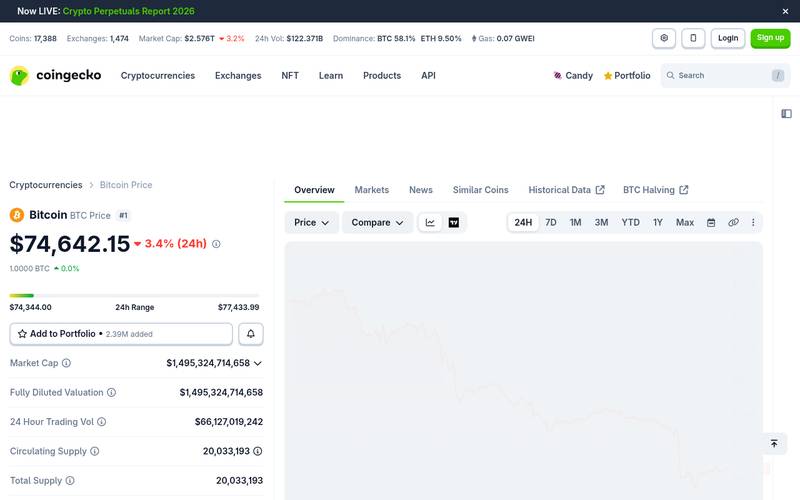
BTC ETF returns closely mirror Bitcoin’s price minus management fees. Major funds like IBIT charge annual fees of 0.19% to 0.30%, with IBIT at 0.25%. Over short periods this drag is negligible, but it compounds over decades.
Bitcoin-related equities behave differently still. Mining stocks like MARA and RIOT are classified as “high-beta” plays that amplify Bitcoin’s price moves in both directions due to high fixed operating costs. When BTC rises 20%, mining stocks might surge 40%, but a 20% BTC decline can translate into 50%+ losses in these equities.
The Crypto Fear & Greed Index currently sits at 28 (Fear), reflecting broad market caution. Bitcoin is trading roughly 40.8% below its October 2025 all-time high. Despite this short-term weakness, institutional appetite for BTC ETFs remains strong.
BlackRock’s IBIT became the fastest ETF in history to reach $100 billion in AUM, hitting the milestone in 435 days compared to Vanguard’s VOO, which took 2,011 days. IBIT also recorded a single-day inflow of $970 million, its largest since the post-election surge, while total U.S. spot Bitcoin ETFs topped $1 billion in net inflows in a single day.
Risk of total loss varies dramatically across the three categories. A diversified equity index fund has effectively zero chance of going to zero. A BTC ETF is protected by professional custody and SEC oversight. But individual altcoins, and even some crypto-related stocks, carry real risk of permanent capital loss.
Taxes, Accessibility, and Practical Friction Points
Tax treatment is one of the most underappreciated differences. The IRS treats cryptocurrency as property, meaning every trade, swap, or spending event triggers a taxable gain or loss. BTC ETF shares follow standard capital gains rules familiar to any stock investor. Dividend-paying stocks add another layer: qualified dividends receive preferential tax rates.
Retirement account compatibility is a decisive factor for many investors. BTC ETFs can be held in IRAs and 401(k)s, allowing tax-deferred or tax-free Bitcoin exposure. Direct Bitcoin ownership cannot be held in most standard retirement accounts, which is particularly relevant as the SEC has been expanding Bitcoin index options trading on traditional exchanges.
Custody and insurance protections diverge sharply. Brokerage accounts holding ETF shares or stocks are SIPC-protected up to $500,000. Crypto exchanges offer no such insurance, and exchange failures like FTX in 2022 resulted in billions in customer losses. Self-custody eliminates exchange risk but requires rigorous seed phrase management.
On accessibility, all three options now offer fractional investing from as little as $1. Stocks and ETFs trade through any major brokerage. Direct crypto requires a crypto exchange account, though major platforms like Coinbase and Kraken have streamlined onboarding considerably.
Matching Each Option to Your Investor Profile
Michael Saylor, executive chairman of Strategy, laid out a clear decision framework in a Yahoo Finance interview. For investors who want zero counterparty risk and have a long time horizon, he recommends buying Bitcoin directly. For those who simply want BTC exposure through a brokerage account, he points to ETFs like IBIT. For investors willing to accept amplified volatility in pursuit of outperforming Bitcoin itself, he suggests crypto-related equities.
“If you don’t want to take any counterparty risk and if you have a long time horizon, then you should probably buy the Bitcoin. If you simply want the asset and you want it in a brokerage account, you should buy the ETF like IBIT. If you want to outperform Bitcoin and you’re ready to get on the roller coaster, you should buy the equity.”
Michael Saylor, Executive Chairman of Strategy
For risk-averse, long-term investors focused on retirement, a BTC ETF as a satellite allocation (5-10% of portfolio) alongside a core equity index fund offers regulated, insured crypto exposure with tax advantages. This is the path that benefits most from the regulatory infrastructure the SEC built around spot ETF approval.
For crypto-curious traditional investors, the ETF is the middle path: regulated, SIPC-protected, IRA-compatible, but without self-sovereignty or access to DeFi, staking, or Web3 applications. As regulatory frameworks continue evolving, with institutions like the ECB actively shaping digital asset rules, the ETF wrapper provides a familiar structure.
For active crypto participants who want to use Bitcoin in DeFi protocols, earn staking yields on proof-of-stake assets, or maintain full self-custody, direct ownership is the only option that preserves on-chain utility. The trade-off is full responsibility for security and a more complex tax reporting burden.
As Grayscale’s head of research Zach Pandl has noted, “Crypto is a volatile asset class, and in some sense, there is no avoiding that volatility.” The question is not which option eliminates risk, but which vehicle aligns that volatility with your timeline, tax situation, and risk capacity.
No single option is universally superior. A diversified approach, combining a core equity index with a BTC ETF allocation and selective direct crypto holdings, lets investors capture different return drivers while managing downside exposure. For personalized allocation guidance, consulting a financial advisor familiar with digital assets remains the prudent step.
Frequently Asked Questions
Is a Bitcoin ETF the same as owning Bitcoin?
No. A BTC ETF gives you price exposure, but a fund manager (like BlackRock) holds the actual Bitcoin. You cannot transfer ETF shares to a crypto wallet, use them in DeFi, or self-custody them. You own shares in a fund, not Bitcoin itself.
Are cryptocurrencies riskier than stocks?
Generally yes. Bitcoin’s annual volatility is several times higher than the S&P 500’s, and smaller altcoins can lose 90%+ of their value in downturns. Diversified stock index funds have a floor supported by corporate earnings; most individual cryptocurrencies do not.
Can I hold a BTC ETF in a Roth IRA?
Yes. Spot Bitcoin ETFs like IBIT and FBTC are available through major brokerages including Fidelity, Schwab, and Interactive Brokers, and can be held in traditional IRAs, Roth IRAs, and many 401(k) plans.
Should beginners invest in crypto, a BTC ETF, or stocks?
Beginners with low risk tolerance should start with a diversified stock index fund. Those wanting Bitcoin exposure without managing wallets or crypto tax complexity should consider a BTC ETF. Direct crypto ownership suits those comfortable with higher volatility and willing to learn self-custody.
What are the tax differences between a BTC ETF and direct crypto?
BTC ETFs follow standard capital gains rules: you pay tax only when you sell shares. Direct crypto is treated as property by the IRS, meaning every trade, conversion, or spending event is a separate taxable event, significantly increasing reporting complexity.
Disclaimer: This article is for informational purposes only and does not constitute financial or investment advice. Cryptocurrency and digital asset markets carry significant risk. Always do your own research before making any investment decisions.