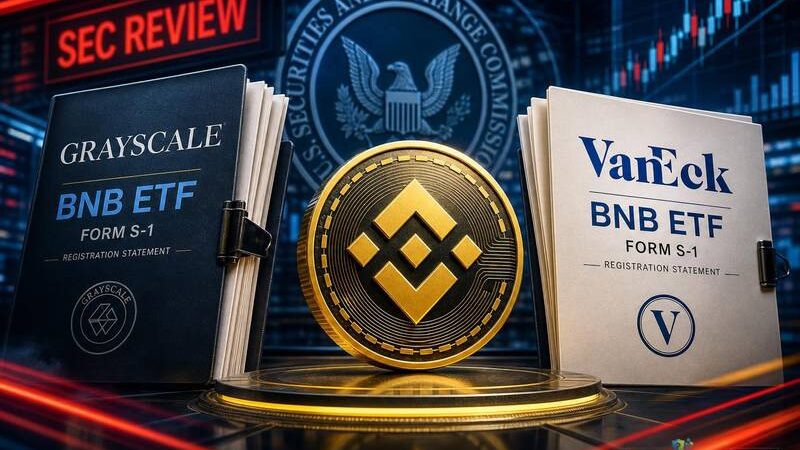
VanEck and Grayscale File Amended BNB ETF Documents With the SEC
VanEck and Grayscale have filed amended BNB ETF documents with the U.S. Securities and Exchange Commission, signaling that both firms are actively progressing their applications for an exchange-traded fund tied to BNB.
The amended filings indicate that the regulatory review process for a BNB-focused ETF remains ongoing. VanEck submitted an amended S-1 registration statement, while Grayscale filed its own S-1 amendment with the SEC.
What the amended BNB ETF documents signal
An amended filing is not a new application. Both VanEck and Grayscale had previously submitted initial S-1 registration statements for proposed BNB ETFs, and these latest amendments represent iterative updates to those original proposals.
The fact that both issuers continue to revise their paperwork suggests the applications have not been withdrawn or abandoned. Amended filings are a routine part of the SEC’s registration process, where issuers respond to staff comments or update disclosures.
What is confirmed versus what remains unknown
What is confirmed: two major asset managers, VanEck and Grayscale, have submitted updated ETF-related documents to the SEC for a product tracking BNB. This is verifiable through public SEC filings.
What remains unknown: whether the SEC has provided formal feedback, what specific changes the amendments contain, and any timeline for a decision on the applications.
Why the SEC amendment step matters for a BNB ETF application
ETF registration statements typically go through multiple rounds of revision before the SEC either declares them effective or issues a refusal. Each amendment cycle generally reflects the issuer addressing regulatory staff questions or updating financial disclosures.
For BNB specifically, the amendment process matters because no BNB ETF has previously been approved in the United States. The continued filing activity from two established firms suggests institutional interest in bringing a regulated BNB investment vehicle to market.
What readers should and should not infer
An amendment does not signal imminent approval. It also does not indicate rejection. Readers should interpret these filings as evidence that the application process is active, nothing more.
The SEC has historically taken extended review periods for novel crypto ETF products. Filing progress is a necessary step, but it carries no predictive value regarding the final outcome.
What the amended filings could mean for BNB market attention
Institutional-branded filings from firms like VanEck and Grayscale naturally draw attention to BNB as a potential investable asset through traditional financial channels. This mirrors the pattern seen with Bitcoin and Ethereum ETF filings, where the application process itself generated sustained market interest. Grayscale has previously amended its S-1 for the proposed BNB ETF earlier in the review cycle.
The presence of two competing issuers pursuing the same product also signals that multiple firms see commercial viability in a BNB ETF, which broadens the narrative around BNB beyond its role as a utility token on the Binance ecosystem.
Regulatory filing news tends to affect sentiment even before any decision is made. However, readers should separate attention from concrete outcomes. No inflows, product launches, or approvals have occurred as a result of these amendments.
What to watch after the amended BNB ETF documents
The next meaningful developments in this story will come from either the SEC or the issuers themselves. Until then, the filings represent procedural progress rather than a decisive moment.
Key watchpoints going forward
- Additional amendments: Further S-1 revisions from either VanEck or Grayscale would indicate ongoing dialogue with SEC staff.
- SEC staff comments: Any publicly available comment letters would reveal what regulatory concerns exist.
- 19b-4 filings: An exchange rule change filing (19b-4) would signal the application has advanced to the next procedural stage.
- Withdrawal notices: Conversely, a withdrawal would indicate the issuer has paused or abandoned the effort.
FAQ about VanEck and Grayscale’s amended BNB ETF filing
Does an amended filing mean a BNB ETF is close to approval?
No. An amended S-1 is a routine procedural step in the registration process. It indicates the application is active but carries no information about timing or likelihood of approval.
Why is BNB the asset in focus for these ETF filings?
BNB is among the largest cryptocurrencies by market capitalization and serves as the native token of BNB Chain. Its scale and liquidity make it a candidate for institutional ETF products, following the precedent set by Bitcoin and Ethereum ETF applications.
Who are VanEck and Grayscale in the context of crypto ETFs?
VanEck is a global investment management firm with existing crypto ETF products. Grayscale is a digital asset manager known for its Bitcoin and Ethereum trusts, some of which have converted to ETF structures. Both firms have extensive experience navigating SEC registration processes for crypto-linked investment vehicles.
Disclaimer: This article is for informational purposes only and does not constitute financial or investment advice. Cryptocurrency and digital asset markets carry significant risk. Always do your own research before making any investment decisions.