Vitalik Buterin urges X: ZK-proofs, blockchain for fair rankings
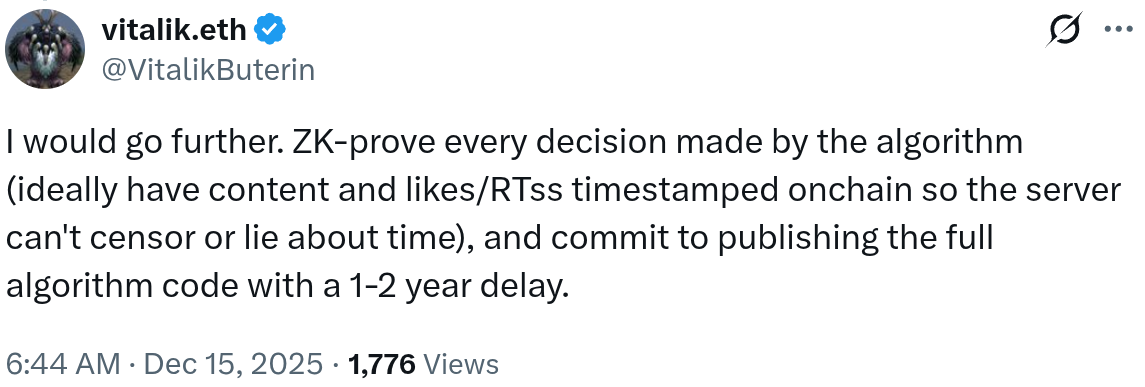
Ethereum co-founder Vitalik Buterin has urged X to adopt cryptographic and blockchain-based tools to make its content-ranking system auditable and resistant to censorship. In an X post on Monday, Buterin proposed using zero-knowledge proofs (ZK-proofs) and blockchain to verify that the platform’s algorithm treats content fairly. He also criticized the platform’s leadership on Tuesday, saying that the way it is run risks enabling coordinated harassment and undermining free speech.
Davide Crapis, the Ethereum Foundation’s AI lead, responded that if X intends to position itself as a free-speech platform, it should disclose its algorithmic optimization targets, ensure they are understandable to users, and allow them to be adjustable.
Buterin outlined a verification framework that would apply ZK-proofs to each algorithmic decision and record timestamps for posts, likes, and retweets on a blockchain so the server cannot censor or falsify timing. He also suggested the platform “commit to publishing the full algorithm code with a 1-2 year delay.”
ZK-proofs are a cryptographic method to confirm that a statement is true without revealing the underlying data — for example, proving someone is over 18 without disclosing their identity. While Buterin did not specify which proofs would be used, they would likely demonstrate that algorithmic outputs meet defined constraints without exposing sensitive information.
Crypto’s approach to social media
Buterin’s comments reflect ideas behind decentralized social platforms often referred to as SocialFi. Although such projects have not achieved mainstream usage, established platforms have taken notice. In early 2025, Meta, the parent company of Facebook and Instagram, blocked links to Pixelfed, a decentralized Instagram alternative, labeling them as “spam” and removing them immediately. Others alleged that competing platforms such as Mastodon faced similar treatment.
The crypto community, generally cautious about centralized control, has repeatedly raised concerns about how social media policies are set and enforced. In early January, Elon Musk said X would prioritize elevating content considered informative or educational. Critics questioned who would make those determinations and whether the policy could be used to suppress certain viewpoints. Musk has also faced accusations of limiting premium features for users who disagreed with him. At the time, Buterin urged Musk to uphold free-speech commitments on the platform and to avoid banning users over disagreements or expressed opinions.
Social media’s broader societal impact
Research indicates that social networks can significantly influence society and democratic processes. A study published in 2024 suggested that access to Facebook may increase belief in misinformation.
Reuters reported last month that court filings indicated Meta halted internal research into Facebook’s mental health effects after finding causal evidence that its products harmed users’ well-being. The cited study found that people who stopped using Facebook for a week reported lower levels of depression, anxiety, loneliness, and social comparison.
The European Union’s Digital Services Act requires platforms to disclose core algorithm parameters, assess systemic risks, and publish findings on potential negative effects, including impacts on civic discourse, electoral processes, and public security. The law also requires vetted researchers to be granted data access to study systemic risk independently. Earlier this month, the European Commission imposed a 120 million euro ($141 million) fine on X, citing non-compliance with the research-access requirement, insufficient transparency in its ads repository, and concerns that the blue checkmark may mislead users because anyone can pay for the “verified” status without meaningful identity verification.
Stay informed, read the latest news right now!
Disclaimer
The content on TrustsCrypto.com is for informational purposes only and does not constitute financial or investment advice. Cryptocurrency markets are highly volatile, always do your own research before making decisions.
Some content may be assisted by AI and reviewed by our editorial team, but accuracy is not guaranteed. TrustsCrypto.com is not responsible for any losses resulting from the use of information provided.