Ripple Partners With Kyobo Life on Bond Settlement Tokenization
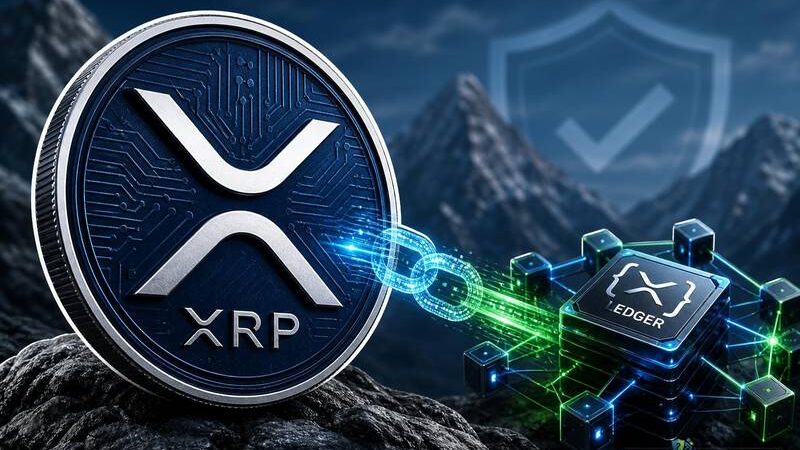
Ripple has partnered with Kyobo Life Insurance to build tokenized government bond settlement infrastructure in South Korea, putting one of the country’s largest life insurers into a regulated blockchain pilot aimed at institutional market plumbing rather than retail trading. The move gives Ripple a new foothold in Korea’s financial sector and adds a concrete real-world asset test case to the industry’s push to modernize securities settlement.
According to Ripple’s announcement from April 15, 2026, the company has teamed up with Kyobo Life Insurance in what it described as its first collaboration with a leading Korean insurance institution.
Ripple and Kyobo Life are framing the project as regulated infrastructure
Ripple said the initiative uses Ripple Custody to support the holding, transfer, and settlement of tokenized assets inside a regulated institutional environment.
That scope matters because the rollout is being positioned as a pilot, not a consumer launch. BanklessTimes reported that the work is a feasibility study rather than an immediate retail product, reflecting Korea’s still-developing legal framework for tokenized securities.
Local reporting from Maeil Business Korea adds a sharper execution timeline: the companies reportedly signed the partnership in September 2025 and entered a testnet-stage technical feasibility phase in April 2026 after completing work tied to domestic regulation, stablecoin payments, and tokenized bonds.
What tokenized government bond settlement means in this case
In practice, the project is targeting the operational layer that sits behind a bond trade, where ownership records, asset delivery, and cash settlement have to line up cleanly between institutions. Ripple’s announcement makes clear that the focus is on custody and post-trade processing, which keeps the story centered on settlement efficiency instead of speculative token issuance.
Ripple said the model is designed to compress the standard T+2 settlement cycle for government bonds toward near real-time execution while also exploring 24/7 payment rails based on stablecoins.
Traditional government bond settlement typically takes two days, according to Ripple’s announcement on the Kyobo Life initiative.
Ripple is pitching that shift as a way to reduce reconciliation friction in a market where government bonds are core trust assets for large institutions. If the testnet work holds up, the partnership would show that tokenization can be applied to conservative financial workflows before it is applied to higher-risk products.
Ripple used that institutional framing in its public messaging before the launch of testnet work in Korea.
“institutional-grade digital asset infrastructure is no longer a future aspiration; it is available, proven, and ready to deploy in Korea today.”
Fiona Murray, Ripple
Why the partnership matters for South Korea’s blockchain finance market
Ripple also tied the project to South Korea’s broader digital-finance evolution, noting that the country has licensed remittance payment providers since 2017. That context helps explain why a regulated institutional pilot can matter even before a tokenized-securities rulebook is fully settled.
The combination of Ripple’s regulated-custody design and Maeil Business Korea’s report that the project is already in a testnet feasibility phase suggests the effort has moved beyond a headline partnership. What investors can verify today is a structured pilot with named infrastructure goals, not a vague memorandum with no operating path.
Government bonds are a deliberate starting point because they sit near the center of traditional finance rather than at its speculative edge. That gives the pilot a trust-and-process angle that fits a Korean insurer better than a headline about retail crypto trading ever could.
How the move fits Ripple’s broader institutional strategy
The Kyobo deal is consistent with Ripple’s effort to sell infrastructure into regulated finance instead of leaning only on token-market narratives. In this case the company is emphasizing custody, settlement compression, and stablecoin-compatible payments, which are the pieces of blockchain infrastructure most likely to matter to insurers and asset managers.
In market terms, XRP was trading near $1.40 at research capture and had gained about 3.45% over 24 hours.
XRP was up about 3.45% over 24 hours in the supplied research, adding immediate market context to the Ripple-Kyobo partnership headline.
The same market snapshot put XRP market cap at about $86.47 billion and 24-hour volume near $2.97 billion, which shows the Kyobo announcement arrived while Ripple remained one of crypto’s most liquid large-cap names.
That reaction also fits a market where infrastructure and macro themes are competing for attention. While traders are still weighing signals such as Tim Draper’s renewed $250,000 Bitcoin target, CryptoQuant’s warning that Bitcoin’s rally faces profit-taking risk as exchange inflows rise, and Bhutan’s $18 million Bitcoin transfer during a sell-off, Ripple’s Korea push is a cleaner story about whether blockchain can remove settlement friction inside traditional finance.
Outlook: what investors should watch next
The next meaningful signal is whether the testnet-stage work reported by Maeil Business Korea moves toward a broader production plan or remains inside feasibility analysis. Ripple and Kyobo still need the legal and operational model to fit Korean rules for tokenized securities, so the short-term story is disciplined execution rather than launch hype.
If the partners can prove that a T+2 settlement workflow can be compressed toward near real time in a regulated environment, the result would strengthen the institutional case for blockchain-based post-trade infrastructure across Asia. If they cannot, the project will still provide a visible benchmark for how far real-world asset tokenization can go before regulation and legacy settlement conventions push back.
FAQ
What is Kyobo Life Insurance?
Kyobo Life Insurance is a major Korean life insurer and Ripple’s institutional partner in the announced tokenized government bond settlement initiative. Ripple described the agreement as its first collaboration with a leading Korean insurance institution.
What does tokenized government bond settlement mean here?
It means moving the custody, transfer, and settlement workflow around government bond trades onto blockchain-based infrastructure. Ripple said the goal is to compress the usual T+2 cycle toward near real time while testing stablecoin-based payment rails.
Why does this matter for Ripple and blockchain finance?
The announcement matters because it ties Ripple to a regulated Korean institutional pilot in a real-world asset category that traditional finance already trusts. It also gives the market a clearer test of whether tokenization can improve settlement operations before any broad retail rollout is attempted.
Disclaimer: This article is for informational purposes only and does not constitute financial or investment advice. Cryptocurrency and digital asset markets carry significant risk. Always do your own research before making decisions.
Disclaimer: This article is for informational purposes only and does not constitute financial or investment advice. Cryptocurrency and digital asset markets carry significant risk. Always do your own research before making any investment decisions.